Forty Creek Distillery

Here's a fun fact: Whiskey made in Canada can be called three things, interchangeably. "Canadian Whisky" "Canadian Rye" and "Canadian Rye Whisky" are all acceptable, regardless of how much or little rye there actually is in the product (including when there's none). Seem silly? Here's an even crazier Rye fact: think of any "major" Canadian rye whisky. Guess what? It's not owned by a Canadian company. Even when the word "Canadian" appears in its title. Indeed such is the current state of international spirit sales, that most of the major brands are owned by a few major international companies. Sound familiar? So when I planned this whiskey week, and knew I wanted to cover Canadian whisky, I reached out to a local company, that is Canadian-owned.
[caption id="attachment_3002" align="aligncenter" width="540"] Of course, I chose to do it on a day when Toronto got smoked by a lake effect streamer that turned a 50 minute drive into a 110 minute drive.[/caption]
Forty Creek whisky will likely be known to anybody who has bought a rye whisky in Ontario recently. Despite being a small (relatively speaking) producer, they have made strides into the Ontario market, have won stacks of awards across the country and beyond, and are being distributed in every province except Quebec (and to be fair, in terms of spirits, dealing with the SAQ is akin to dealing with the LCBO).
Forty Creek is the pride and joy of John Hall, who bought the facility in Grimsby in 1992, and opened Kittling Ridge. He had been in the wine industry for 30 years, and decided to venture out on his own. Here's something a surprising number of people don't realize: In Canada, to call a spirit "whisky", it has to be aged AT LEAST 3 years. This means there is a serious delay between starting the business, and actually selling the product. Which can be tricky. While John laid down his first whisky stocks in 1992, the first part of the business' life was that of a winery. Over time, the focus has been shifting to the distilling business. So much so, that this past summer they officially re-branded as Forty Creek Distillery.
So how's that been working out for them? Well, 50 awards later, it would be reasonable to suggest that they are doing something right. I went to copy/paste the list, but it's long. You can see it here: http://www.fortycreekwhisky.com/awards.html.
The Distillery
Want to know a secret? Distilleries look a lot like breweries. Like, a lot, especially now that many breweries are starting barrel-ageing programs.
[caption id="attachment_2995" align="aligncenter" width="540"]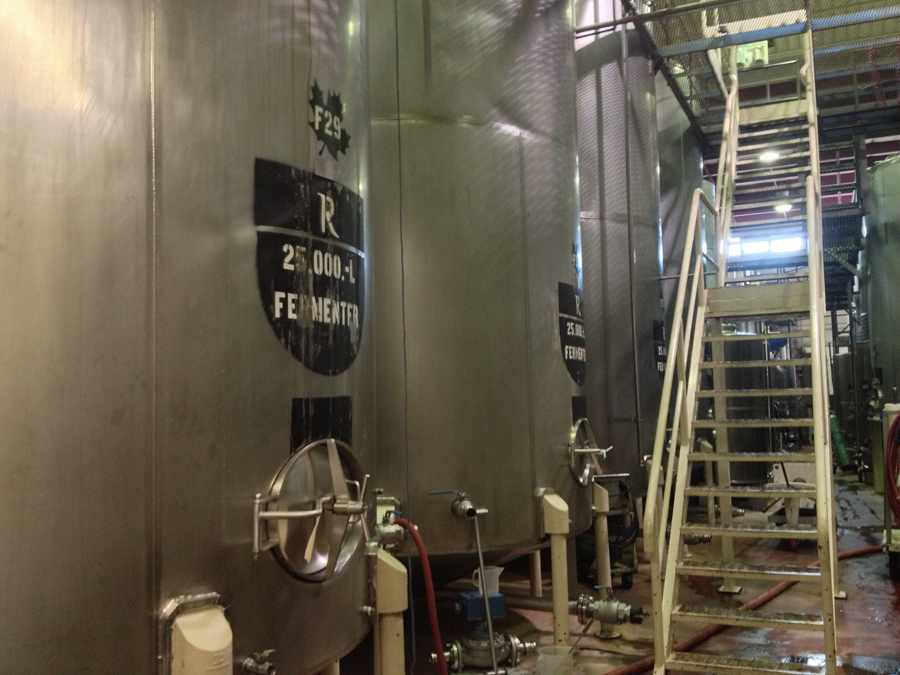 250 Hectolitre fermenting tanks. There's a bunch of these, and some smaller ones too.[/caption]
There is a major component difference, and that is the still. In Forty Creek's case, they actually have a few: two copper pot stills, one large for production batches, and one smaller one for testing, specialty expressions, etc. They also have a column still for some of their other distilled products.
[caption id="attachment_3001" align="aligncenter" width="472"]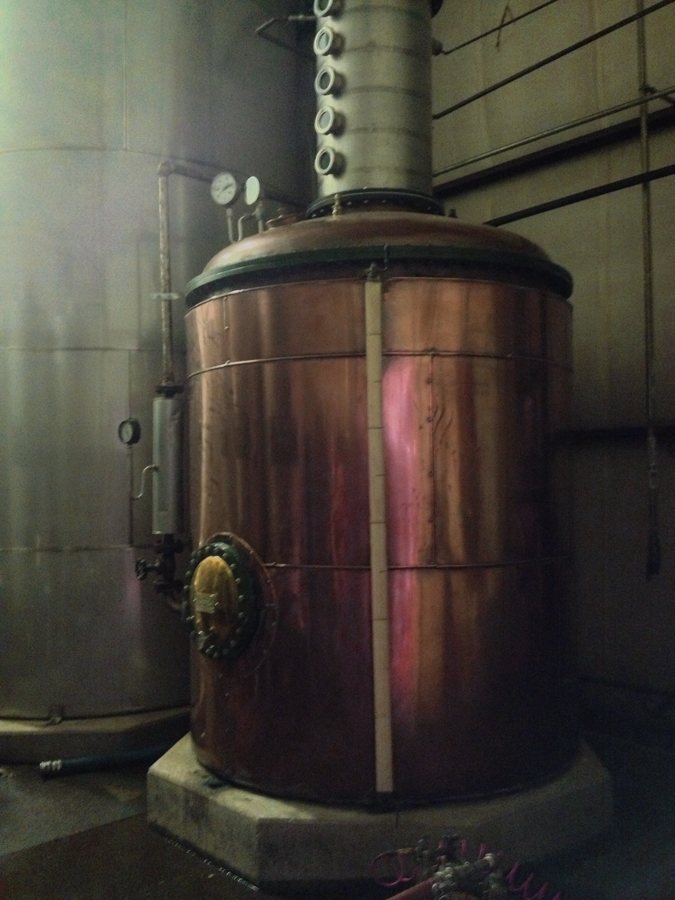 I'm a sucker for old-looking stuff, stuff made of copper, and things used to make booze, so I'm considering tattooing this on my chest[/caption]
So, I know earlier I said Forty Creek was small, relatively speaking. And compared to some of the mega-internationals, they are. But they use a big fast exciting looking bottling line, not unlike some of the bigger lines in breweries around Toronto, like Steam Whistle. And their packaged goods warehouse is massive. And it's full of booze, which makes me quite happy.
[caption id="attachment_3003" align="aligncenter" width="472"]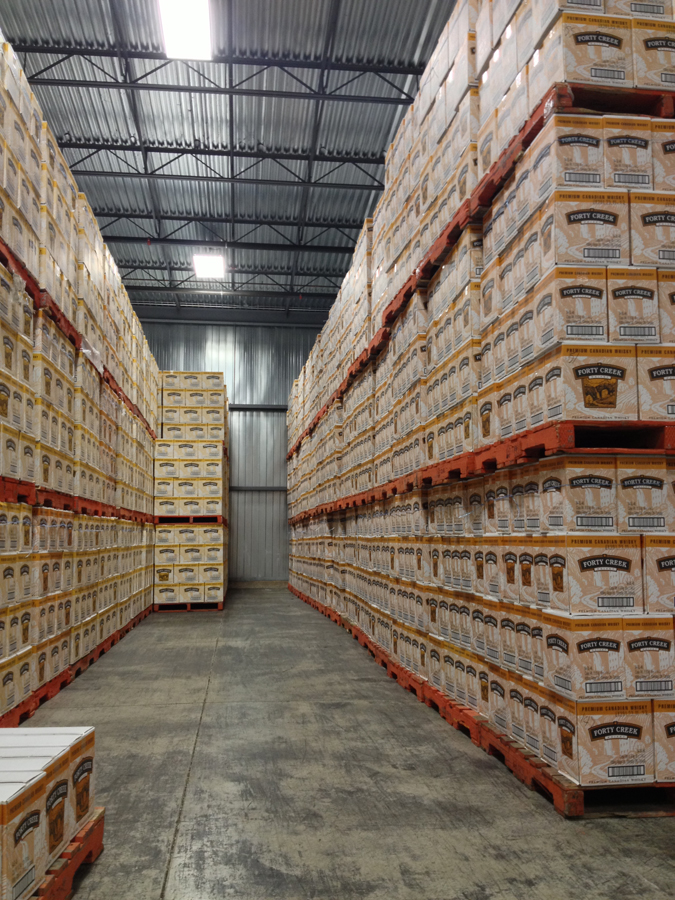 That's a lot of whisky. And it's one aisle out of dozens.[/caption]
But we're missing a step. And it's a looooonng step. Namely, ageing the whisky. This also happens in a large space. Specifically, a climate-controlled warehouse full of one of the happiest sights in the drink-production world: hundreds of barrels full of spirits.
[caption id="attachment_2997" align="aligncenter" width="588"]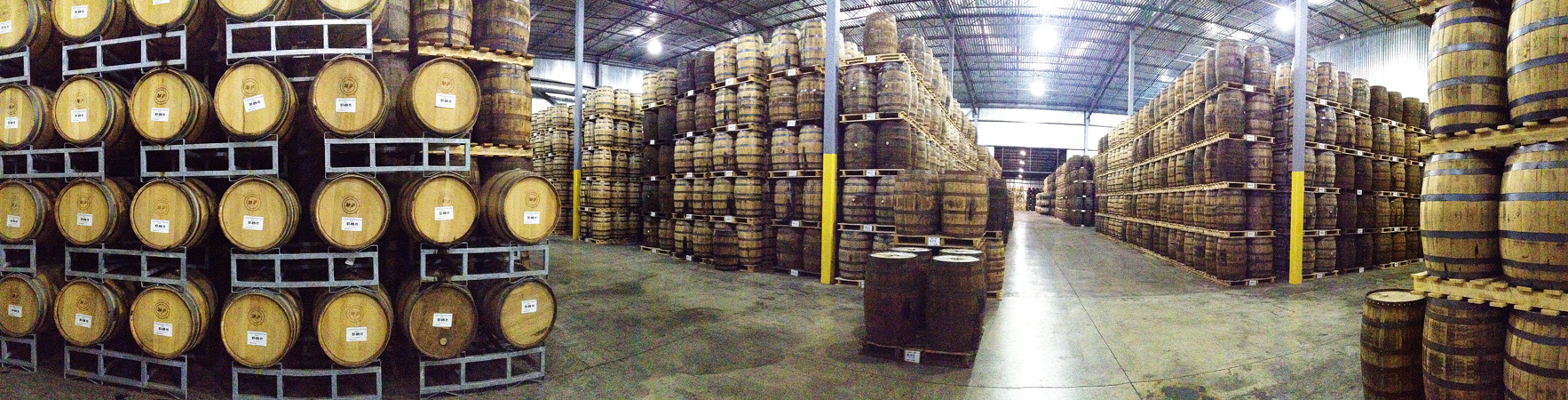 Panorama of the barrel warehouse.[/caption]
The air, despite the advanced ventilation, is boozy and slightly burns your nose and lungs. This is what's known as "the Angel's share". The spirits that evaporate through the wood of the barrels. Depending on a variety of factors, this loss can be anywhere from 2-10% of the barrel. It seems a fair trade for a blessed beverage.
[caption id="attachment_2999" align="aligncenter" width="540"]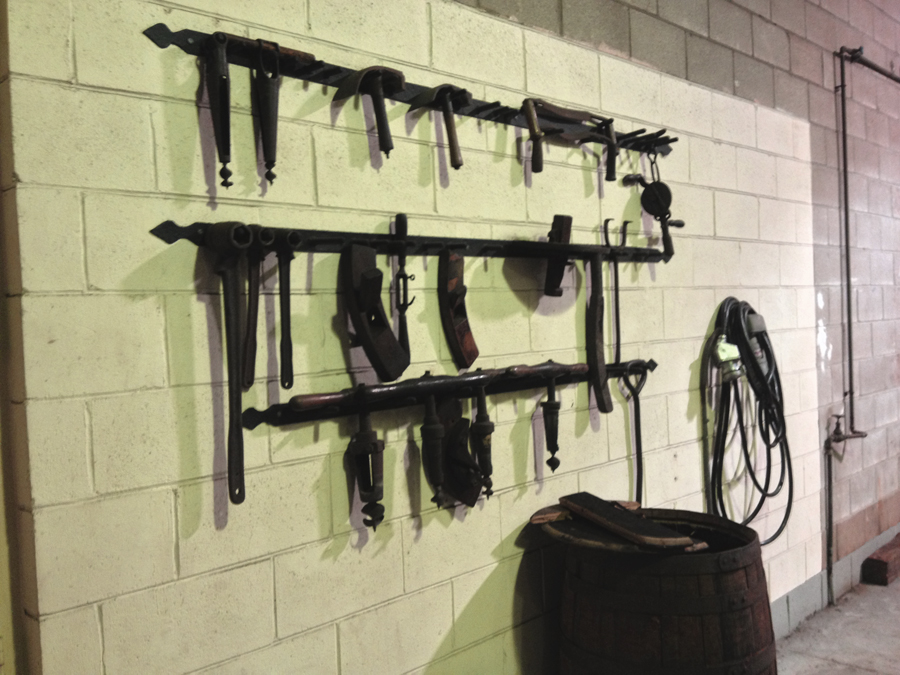 Antique "decorative" cooper's tools. Except they're actually still in use.[/caption]
While they send barrels out for charring and overhaul work, Forty Creek actually still keeps some of the tools of the (now retired) cooper who used to work on their barrels, and still do some basic work themselves.
[caption id="attachment_2998" align="aligncenter" width="540"]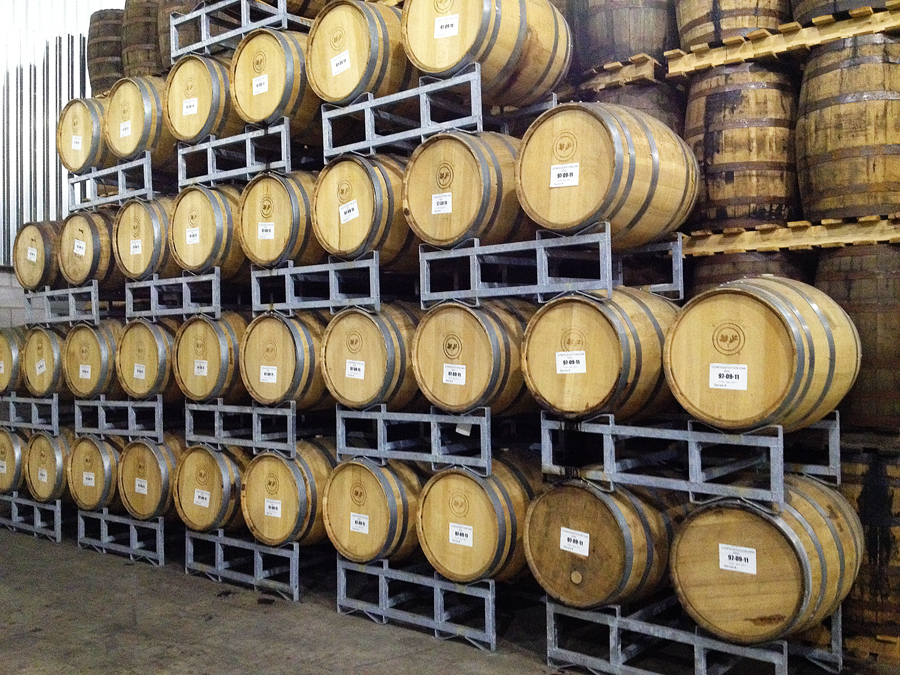 Confederation Barrels, stored horizontally to look sexy. Which they are, being some of the most expensive barrels in the world (more on that in a minute).[/caption]
The Whisky
So, all this talk and pictures, what does it all come to? Well, I'll spoil all the suspense and tell you: Multiple lovely expressions. I got to taste the whiskey with Beth — my host for the day — and John, and was super impressed. The first element of the tasting was exploring the Barrel Select, their flagship expression. But it wasn't just a matter of tasting the product as it's sold. Rather, they draw samples of each of the three distillates used in the blend, and let you taste them on their own, then taste the final product. This is because John doesn't do a mash of all the grains to start with. Each element is fermented and distilled on it's own, then blended when each one is ready, then the final product gets finished in a sherry barrel. This is also why there are no age dates on Forty Creek products. Each distillate is pulled from it's ageing barrel when it is at it's peak, which is different for each element. Tasting this way was an awesome chance to pull apart the flavours in the glass, from each influence.
[caption id="attachment_2994" align="aligncenter" width="540"]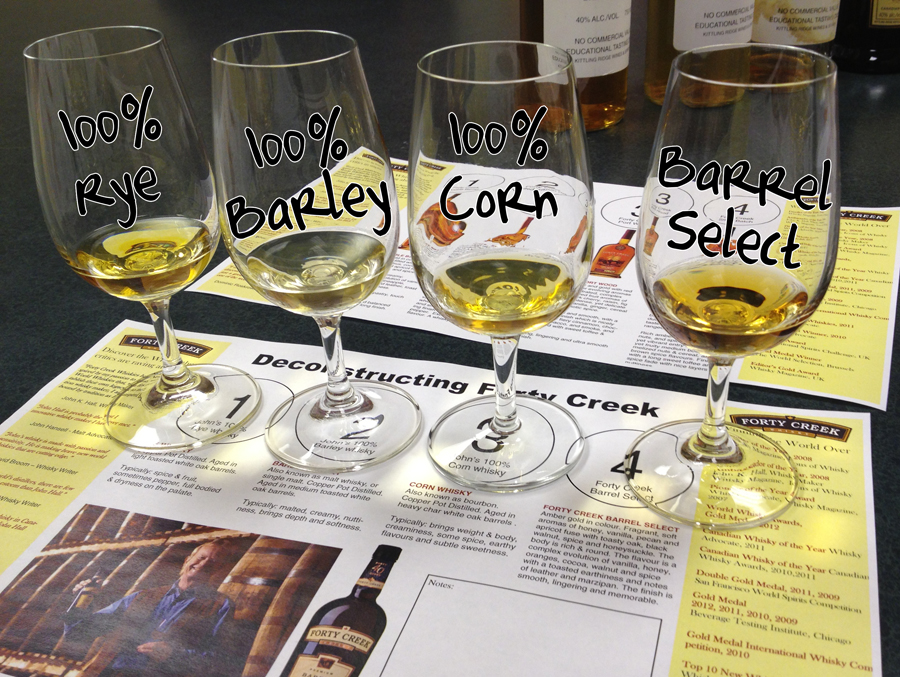 Forty Creek Barrel select, in pieces and complete[/caption]
John often gets asked why he doesn't make single-grain products. His answer is both that of a wine-maker, and also one who likes to be very involved in the process. Simply put, blending allows him to highlight the best of each grain, and diminish any negatives. Some of the finest wines in the world are made this way, and John feels his whiskey deserves no less.
100% Rye
Very bright and lively. Shows spices which are characteristic of rye grains, and some fruitiness that hits on lemons and cantaloupe.
100% Barley
Smells and drinks like a single malt should. Nutty and a little woody, some roasted notes, slightly musty with a touch of minerals, and a delicate finish. Of the three base distillates, this is the one I would most like to see as a stand-alone product. No dice, though.
100% Corn
Smells like bourbon, which it sort of is. Woody from the barrel, heat on the nose, aromas and taste of corn. On the palate there's also coconut and oak, with a buttery weight, and a hot finish.
Barrel Select
On the nose the sherry cask finish is apparent, a little smokey and sweet. There are spices and a touch of fruit, apricots and more lemon. A honey-like sweetness carries with it's velvety body. Finish is delicate, with a nice warming sensation, but not a raw heat. A very approachable blend.
Double Barrel Reserve
After some time proving himself to the bourbon crowd in the USA, John was able to procure bourbon barrels for ageing his whisky, in addition to his own new oak and sherry barrels. And he told me an interesting fact that I had never considered: When the spirit conglomerates send bourbon barrels from the USA distilleries to their European whiskey producers, they ship them (literally). And of course, there are space considerations. So the barrels are disassembled, packed into containers, and sent across the Atlantic. This, of course, takes time. Like, weeks. On balance, the bourbon makers John works with, will contact him when they are preparing to bottle their bourbon, and he will hop in a truck, and drive the 10-12 hours to their distillery. There, he sniffs the barrels that are still wet with bourbon, makes his picks, then drives them home. Within two days of containing bourbon, those barrels are filled and stacked, with Forty Creek whiskey. Because of this, the bourbon influence is huge, and makes for a very tasty expression.
Double Barrel is aged for an extra 3 years in bourbon barrels, and has a lovely smokey nose. It is oaky on the palate, lovely and sweet upfront, with a hint of vanilla, and bananas and toasted coconut. There is a bit more vanilla on the finish, with toast and a notable bourbon heat. Just lovely.
Confederation Oak Reserve
I promised the story about these being some of the most expensive barrels in the world, and here it is: John wanted to make a distinctly Canadian whisky. We already grow all the grains here, but a big peice of any whisky's profile, is it's barrel. So John went out and found a managed forest that had some Canadian White Oak that needed to be felled. He bought the cut trees, and had them sent to the south (in places like Kentucky, you either are a cooper, or know one) for coopering. The trees are the exact same species of White Oak that grow in the USA and are made into thousands of barrels a year, but because our growing season is shorter, the grain of the wood is tighter, which changes the way they act as barrels. Add to the already large cost of shipping the wood, John also insisted on letting the wood air-dry instead of being kiln-dried, which took three years. Time consuming, yes, but it leaves a variety of friendly micro-organisims alive in the wood, which add layers of flavours that would otherwise be lost. And besides, whisky-making is about not rushing things. The barrels were also constructed with thicker staves, which will allow them to be re-charred more than a standard barrel, giving them a longer working life. So after all that time and effort, what was the outcome?
Confederation Oak Reserve is astringent on the nose, with notes of plums and vanilla. There is just a delicate touch of woody oak on the palate. It is sweet, with honey and figs and just a whisper of vanilla. The finish is lightly warming, with a gentle linger of the wood and fruits. Worth the effort, for sure!
Port Wood Reserve
Okay, I know, you probably think that last story was a little nuts, right? I mean, all that effort for these barrels (and incidentally, when John sampled the spirit after the first year in the barrels, he thought it might be the most expensive mistake of his life; it tasted like cedar pencil shavings. Thankfully, it improved vastly with time). But it wasn't the first time he undertook a slow process in the name of a quality product. This year's Canadian Whisky of the Year, his Port Wood Reserve was "born" in 1999. You see, port barrels are available, but again, need to be shipped from Europe, which often means breaking down and drying out. So John did what any sensible, patient wine-maker would do. He made a port, put it in fresh barrels, aged it for three years, and found himself in possession of fresh wet port barrels for his whisky. He also found himself in possession of some fine tawny Niagara-grown port, of which he is a fan. The whisky blend, once properly aged and blended, spends an extra two years in these barrels, which adds notable depth of colour and flavour.
[caption id="attachment_3000" align="aligncenter" width="472"]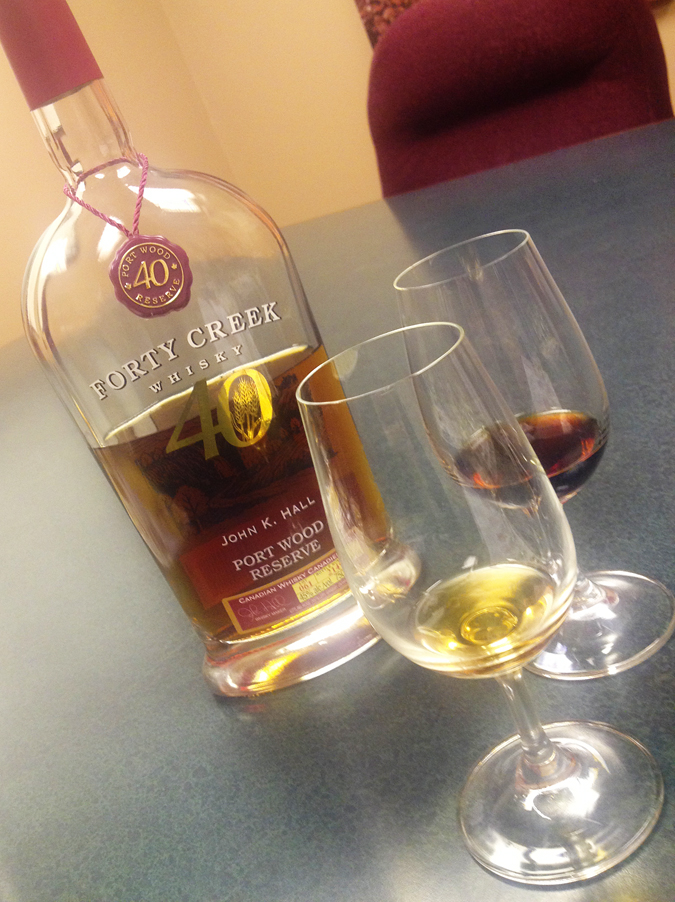 Forty Creek Port Wood Reserve, with the port from the barrel.[/caption]
The most recent release of Port Wood Finish is nearly gone now, but there are still some bottles around the province to be had. And they're worth the effort. On the nose, the whisky is jammy and rich, with almonds and tobacco. The taste is thick with port, oak and molasses. There is heat, but it is still quite smooth. Hugely complex, this tastes like port and a slice of Christmas Pudding in a glass, and would definitely be appropriate after thanksgiving or Christmas dinner. Though I would happily drink it pretty well any time. Just stellar. Even more interesting, was when I shared my love for port, John dashed off to get us some glasses of the port that came out of the barrels before the whisky went in. And it was quite nice. So much so that I asked why it wasn't a production product. John said he preferred to keep it to drink himself.
And So?
Drink Forty Creek. The Barrel Select is a lovely blended whisky that you can sip and enjoy, but is priced in a range where you can cook with it without guilt (as I did last night, mixing it with maple syrup and smokey mustard to make an excellent glaze for some sockeye salmon), and you don't need to bite your tongue if your father-in-law comes over and mixes it with coke or ginger ale. The higher-end bottles range in price, but all are excellent products that deserve space on your bar shelf. Support the local guy. Forty Creek employs a crew of Ontarians, and their profits stay in the country, supporting our economy. It's not the cheapest or fastest way to make whisky, but John wouldn't have it any other way.
Cheers!
3 comments
Comments are closed. These are preserved from the original site.
Hi. my dad is a real big forty creek fanatic, and I thought getting him a barrel of it, if possible would be the best christmas present he has ever got. If it is possible could you email me the price or give me another couple ideas if you have anything other then regular bottles of whisky?
Thanks
The daughter of a Forty Creek Fan
Brittany McNabb
Hi Brittany.
Ummmm, well, I don't work for 40 Creek, so have no idea if they would sell you a barrel or what types of "other" things they might have for sale. I'm also not sure if you realize it, but a barrel is 225 litres of whisky, which is quite a lot. I know that the LCBO has some great gift sets during the holiday season, and it's possible 40 Creek might have a nice package. If not, check http://www.fortycreekwhisky.com/ for more information about 40 Creek. Good luck.
These three components will remove dry scalp within a two to three days.
A cold infusion of the balm taken freely is reputed to be outstanding for its relaxing influence on the nerves.
Most people will never understand preparedness.